- Green Queen Future Food Weekly
- Posts
- Why are PB Meat brands missing out on the CPG boom? - Future Food Weekly
Why are PB Meat brands missing out on the CPG boom? - Future Food Weekly
Plus: Bruce Friedrich on his new book MEAT, a CEO shakeup at Impossible and Omeat's rebrand. This and more in Green Queen Media's global roundup on future food news.


Sonalie Figueiras & Nicola Spalding
February 05, 2026
Morning All,
My LinkedIn feed this week is full of posts about another hot CPG acquisition. Cult Japanese BBQ sauce maker Bachan's Inc was acquired by The Marzetti Company on Monday for $400 million. Last year, PepsiCo snapped up good-gut-health prebiotic soda Poppi for $1.95B and grain-free Mexican staples brand Siete Foods for $1.2B to fuel its “positive choices” push. I predict more M&A action this year and next. There are so many really exciting, fun CPG brands at the moment, some of which are carving out impressive niches. It's a really great time to be a consumer. Where are the plant-based CPG unicorns? Oatly stands out as an outlier, although since its 2021 $1.4B IPO, its stock has seriously stumbled, and Beyond Meat feels like a cautionary tale at this point.
I've been wondering: what are plant‑based brands doing wrong? And beyond the exits, where are the cool plant-based brands? For years now, I’ve worried about how the industry has lacked the CPG talent chops and strategy know-how needed to build uber- cravable CPG brands with staying power and VC-call dust. Some of my thoughts:
1. Meat‑Centric Mission vs. Broader “Better‑For‑You” Appeal
Plant‑based has been on meat/dairy swaps (burgers, milks), but winners like Poppi (prebiotic soda), Siete (grain‑free tortillas), and Bachan’s (umami BBQ sauces) thrive by solving taste + identity gaps without the baggage of “meat replacement”. Consumers want bold flavours, cultural authenticity and health halos (low‑carb, functional), not 'bleeding burgers' that scream compromise.
2. Premium Pricing Without Loyalty
Plant‑based often commands 2–3x conventional meat prices, but the repeat rates just aren’t there. Better‑for‑you CPG (e.g., Olipop, Liquid Death) grew 20–50% YoY while US plant‑based meat sales have been flat/declining since 2022. Buyers try once, and then they don't come back, lacking the emotional stickiness of Siete’s family story or Poppi’s TikTok virality.
3. Distribution & Merchandizing: Freezer Aisle Woes
PB meats are stuck in frozen aisles, whereas acquirers (and consumers) want shelf‑stable pantry staples that scale via CPG muscle.
4. Mission Drift & Investor Fatigue
There’s been a real dilution of ‘save the planet’ brand equity, which has hurt brands and alienated both consumers and investors. Meanwhile, plant-based brands have struggled to create cult followings the way Poppi and Siete built cults via DTC + social before scaling in the mainstream. VCs poured USD 2B+ into PB meat pre‑2020; now they are chasing GLP‑1 wellness or regen ag (and everything AI).
5. Cultural Mismatch in Polarised Times
I keep hearing that “Meatless” feels preachy in a protein‑heavy, pro-carnivore MAHA era. CPG winners are sidestepping ideology for indulgence (Fly By Jing’s mala heat, Bachan’s umami). This is probably the most difficult problem to solve for plant-based brands: how to rejig their WHY. A few years ago, when the whole world was talking about how to solve climate change, plant-based brands were hot property. Today, consumers have moved on, and brands need to completely redefine themselves. The question is to what? And for whom?
MEAT: Good Food Institute President and longtime Bruce Friedrich has published a terrific new book this week, which manages to be both realistic and optimistic-no easy feat in today’s world. We’ve got a great interview for you about it, but I am also doing an extra shoutout to say that this book is worth adding to your Kindle list. Get it here.
Climate Feed Stories: Finally, a quick plug for the stories of our 2025 Climate Feed Fellows, all of which are worth your (reading) time. They include a deep dive into India's dairy juggernaut, which pumps out the world's most milk but unleashes methane mayhem and farmer ruin amid climate chaos; a feature on how Switzerland's meat subsidies sabotage homegrown alternative proteins innovation; a call to rethink hotel breakfast menus in Lesotho; a closer look at how solar companies are paying farmers to stop growing crops in Punjab; an investigation in how ESG funds are bankrolling deforestation; and a piece asking whether Kenya's indigenous crops are in fact climate solutions.
-Sonalie

Image courtesy of Bruce Friedrich
💡 Only On Green Queen
🥩 Interview: GFI President Bruce Friedrich, Author of ‘Meat’, on Protein, Politics & Plants
To mark the release of his book, Meat, the Good Food Institute founder Bruce Friedrich talks alternative proteins, political bans, investment struggles, blended meat, and parallels with cars and the internet.
😮 Op-Ed: Where Disgust Meets Distrust: The Viral Psychology Behind the “Ultra-Processed Food” Narrative
Dr. Sophie Attwood argues that the UPF narrative has gone viral by weaponizing the innate human fear of the unknown, also known as neophobia, inadvertently grouping sustainable and necessary novel food innovations with nutritionally poor junk foods.
🥛 Trend Report: Is Hybrid Dairy the Bridge Plant-Based Milk Needs?
Hybrid dairy is looking to plug the gap between dairy’s climate and health issues and plant-based alternatives’ taste and price challenges – could it be the near-term solution this industry sorely needs?
🍫 Industry Insights: How Planet A Foods is Taking Over the Chocolate World with Its Cocoa-Free Alternative
Germany’s Planet A Foods is leading the cocoa-free alternative race to help the chocolate industry deal with the climate crisis. It has now gone global and will soon enter the US.

Courtesy of Green Queen Media
🏆 2025 Climate Feed Fellows Reporting
Editor’s Note: We are thrilled to share the last three stories by our 2025 Climate Feed Fellows, featuring outstanding reporting at the intersection of food and climate.
🇮🇳 Solar Panel Companies Are Paying Farmers to Quit Growing Crops, And It’s Risking India’s Food Security
The conversion of fertile farmland in Punjab into solar energy projects offers farmers a stable income, but is raising critical concerns about the long-term impact on the country’s food security and the region’s agrarian identity, explains Rachna Verma.
🌳 Billions of Dollars Marketed As ‘Green’ Are Quietly Fuelling Deforestation
From Brazil’s cattle pastures to Indonesia’s palm oil plantations, European “green” funds that claim to combat climate change are financing companies tied to deforestation and rising emissions, reveals a new investigation by Giorgio Michalopoulos.
🐄 India’s Dairy Crown Comes At A Heavy Cost: To The Climate, Cows & Those Who Rear Them
India’s celebrated White Revolution, which made it the world’s top milk producer, is now facing intense scrutiny over its hidden and significant costs to the climate, animals, and the economic security of its small-scale farmers, reveals Sanchita.
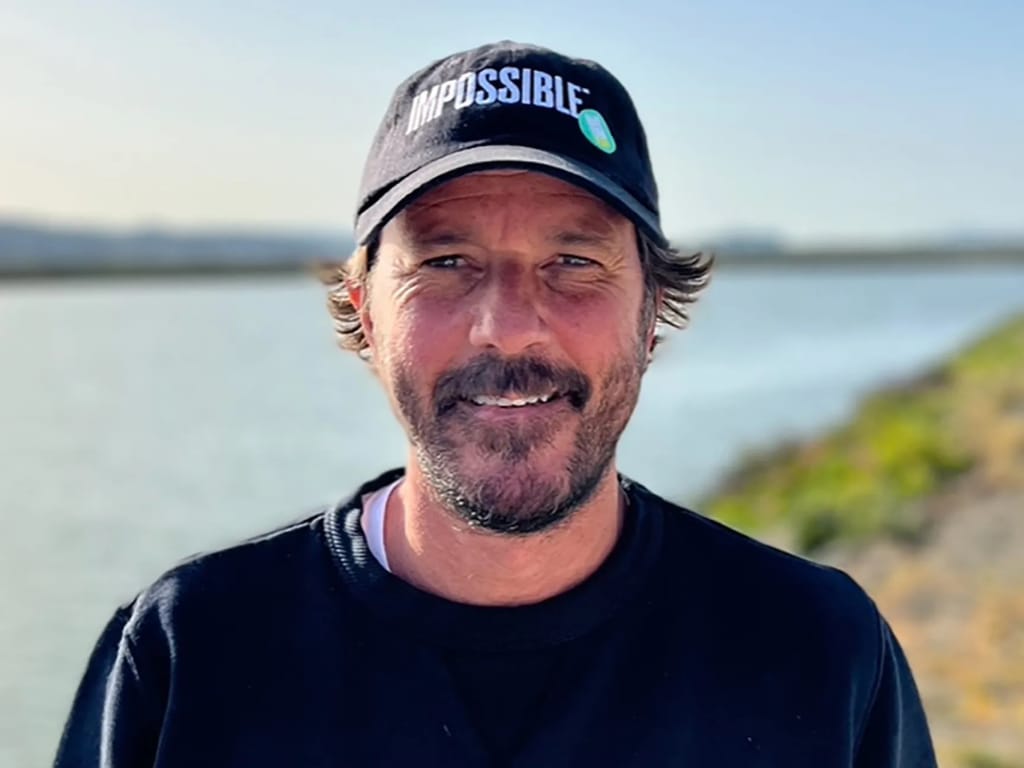
Image courtesy of Impossible Foods
✅ Must-Read Headlines
👋🏼 Plant-based meat leader Impossible Foods announced that CEO Peter McGuinness is stepping down after nearly four years, with the company’s executive team set to take over day-to-day operations.
💡Impossible has become one of the most visible plant-based meat brands globally, but could this spell the beginning of the end?
💰US cultivated meat startup Omeat has rebranded to Evergreen Connect and secured $6 million to launch stateside and in Singapore.
💡The company is taking the blended meat approach – combining cultivated meat with conventional animal protein to offer the best of both
🌱 UK tofu leader The Tofoo Co is set to acquire German seitan producer Topas, best known for its Wheaty brand.
💡The acquisition will equip The Tofoo Co with access to a trusted local manufacturing partner in Germany, giving it “strong roots” ahead of its planned launch in the country later this year.
🐟 Austria’s Revo Foods, known for its 3D-printed mycoprotein-based seafood alternatives, is working with US-based Atlantic Fish Co to create a whole-cut cultivated whitefish fillet.
💡Could mycoprotein be the missing ingredient in scaling cultivated seafood? A hybrid approach certainly offers plenty of advantages.
🇮🇳 Switzerland-based Planetary has signed a partnership framework with publicly listed Indian agro-industrial player DCM Shriram Bioseeds to bring mycoprotein production to one of DBO’s sugar mills in India.
💡Planetary’s decentralised fermentation model helps to significantly reduce one of the hurdles to commercialisation: equipment cost.
🇸🇬 Singapore state-owned food innovation platform Nurasa has teamed up with New Wave Biotech to help alternative proteins escape the valley of death with AI-led bioprocess optimisation.
💡The collaboration tackles three of the biggest barriers to scaling biomanufacturing; could it help the city-state become a ‘regional launchpad’ for sustainable proteins?
🍫 Italy’s Foreverland has expanded the availability of its cocoa-free chocolate, Choruba, through partnerships with some of Europe’s leading confectionery manufacturers.
💡Several of these products have already entered commercial channels, and some will be on retail shelves or accessible to private-label products across Europe and internationally soon.

Image courtesy of Vivici
🚀 Everything Else In Future Food
🥤 Dutch fermentation firm Vivici is positioning its animal-free whey ingredient as the ideal base for protein shots. Here’s why.
🍜 The National University of Singapore has introduced carbon-labelled meals on campus menus as part of a research initiative with carbon accounting firm Zevero.
🆕 New analysis from Food Impact Partners reveals that these countries and companies posted the most future food openings in 2025.
👩🏻🌾 The best way for meat farmers to make more money could be to produce less meat, according to new research by British think tank Green Alliance.
🥩 Livestock producers may make claims of sustainability or even carbon neutrality, but beef can never be truly climate-friendly, according to the latest research by the World Resources Institute.
🤒 A new Factory Farming Index suggests that industrial animal agriculture leads to a loss of 1.8 years of healthy life per person. Here’s why.
🌱🍔 Future Food Quick Bites

In our weekly column, Future Food Quick Bites, we round up the latest news and developments in the alternative protein and sustainable food industry. This week, Future Food Quick Bites covers Ikea’s Tiny Chef collab, This’s financial milestone, and Kynda’s new mycelium facility.
📆 Scene & Heard

🚀 Could the Amazon Devices Climate Tech Accelerator Help You?
💻 The Amazon Devices Climate Tech Accelerator just launched to accelerate collaboration between climate tech innovators and enterprise decision-makers—helping streamline the path from validation to adoption opportunity. Find out more here.
🥇 Forward Fooding unveiled the 2025 FoodTech 500 finalists at Gulfood 2026 in Dubai, and the final rankings will be unveiled on March 30, 2026. Check out the list here.
🇬🇧 Future Food Asia marks its 10th edition in Singapore on 12th-13th May, bringing together the region’s agrifood leaders to drive real impact across food, bioeconomy, and sustainability through bold ideas, collaboration, and collective action. Learn more here.
The world’s leading global food system founders, investors, policymakers and corporate execs read Future Food Weekly → subscribe now.
