- Green Queen Future Food Weekly
- Posts
- Where Does COP Go From Here? - Future Food Weekly
Where Does COP Go From Here? - Future Food Weekly
Plus: Exclusive interviews, funding to reduce rice methane emissions and Oatly's fashionista push. This and more in Green Queen Media's global roundup on future food news.


Sonalie Figueiras & Nicola Spalding
November 13, 2025
Morning Folks,
COP30 has arrived in Belém—and I can’t help but notice the hollow echoes in the halls and headlines. Fewer than sixty heads of state have confirmed attendance, sharply down from previous years, and many G20 nations are sending deputies rather than top-level leaders. Most strikingly, the United States is skipping the summit entirely, reinforcing a trajectory of climate disengagement that began with its withdrawal from the Paris Agreement. Even corporate representation is thinner, kickstarting a provocative question for those of us working in food system transformation: is there any point to COP when the heavy hitters don’t bother to show up?
Green Queen is not a platform for easy cynicism, but facts beg for honesty. The politics have never been more fraught; global climate diplomacy is fragmenting, overshadowed by bilateral deals, nationalist pushbacks, and private sector pivots. COP, in theory, remains the one stage where governments, NGOs, activists, and innovators co-create and contest the future. But the gravitational pull of the summit is waning, and the gap between UN declarations and real-world impact grows wider by the year.
Should we grieve the US absence? In pure emissions terms, yes: the US remains the world’s largest historical emitter and one of the most influential players in climate finance, technology, and law. When it chooses not to engage, global negotiations lose both heft and hope. But let’s face reality: the current administration’s narrative frames climate change as a “con job” and actively works to undermine global deals, making constructive dialogue nearly impossible. As food system innovators, it’s time to invest our strategic energy elsewhere.
Into this vacuum steps China, with nuance and ambition. It’s the largest agricultural producer and top clean tech supplier in the world, deeply invested both at home and abroad in low-carbon solutions, from solar, wind, and electric vehicles, to foodtech and agri-food modernization. China’s COP30 delegation won’t make headline speeches, but their negotiations and side deals will quietly shape market trajectories for agricultural decarbonisation and supply chain resilience, especially across Asia, Africa, and the BRICS bloc.
For foodtech leaders, the lesson is clear: hoping for heroic COP outcomes is no longer enough, especially when food and agriculture remain on the margins of the main negotiation agenda. Last year’s food system pledges at COP29 set ambitious, system-wide targets for methane and carbon neutrality, but the momentum is always vulnerable to political cycles, economic shocks, and corporate lobbying. At COP30, achieving greater visibility for the food transition is urgent: the sector generates one-third of global emissions, yet receives just 4% of climate-related development finance.
What should foodtech hope for (and demand) this year?
Integration of agri-food systems into national climate plans and climate finance decisions, not as a footnote but as a strategic pillar.
Concrete pathways and metrics for decarbonising food production, supply chains, and consumption, especially methane, food loss and waste, and dietary change.
Clear commitments from BRICS and emerging markets to channel climate innovation into food, not just energy.
More radical accountability: the stories the sector brings must illustrate how diet shifts, plant-based innovation, and regenerative agriculture lead, rather than follow, the net-zero transition.
I believe the future of COP (and the climate) is tied to whether food can finally move from the sidelines to the spotlight. When world leaders and corporations are absent, it’s a chance for foodtech, local innovators, and civil society to step up, drive the conversation, and show the world what climate action tastes like. After all, if the summit isn’t working for food, maybe food can help save the summit.
-Sonalie

💡 Only On Green Queen
📝 COP30 Digest, Vol 1: Everything You Need to Know in Food & Climate News
Welcome to #COP30 – watch the opening ceremony here. In our Green Queen COP30 Digest, our editorial team curates the must-reads, the must-bookmarks and the must-knows from around the web to help you ‘skim the overwhelm’. Check out volume one here.
🇸🇬 Industry Insights: Singapore Scraps ’30 By 30′ Policy And Launches New Food Security Plan
Singapore has replaced its ’30 by 30′ food sovereignty plan with one that sharpens focus on specific food categories; notably, cultivated meat isn’t part of the new strategy. Here’s what’s going on, and what it means.
🥛 ‘Oat Couture’: Why Oatly is Betting on Fashion to Turn Its Fortunes Around
With seasonal lookbooks and a flavour trend report that feels like it came from the fashion industry, Oatly is courting Gen Z to take its oat milk to newer heights. Here’s an exclusive peek behind its strategy.

Image courtesy of HappyCow
🌱 Interview: Vegan Discovery App HappyCow Eyes ‘Reboot’ Following Team Restructuring & Acquisition
HappyCow, a popular discovery platform for vegan and vegetarian restaurants, has changed hands. In an exclusive interview with Green Queen, its new owner, Claudia Torres, lays out the company’s strategy.
📊 Op-Ed: After the Hype, Signs That Complementary Proteins Are Entering A New Phase
Didier Toubia, co-founder and CEO of cultivated meat pioneer Aleph Farms, believes alternative proteins are bouncing back as business models mature and regulators take notice.
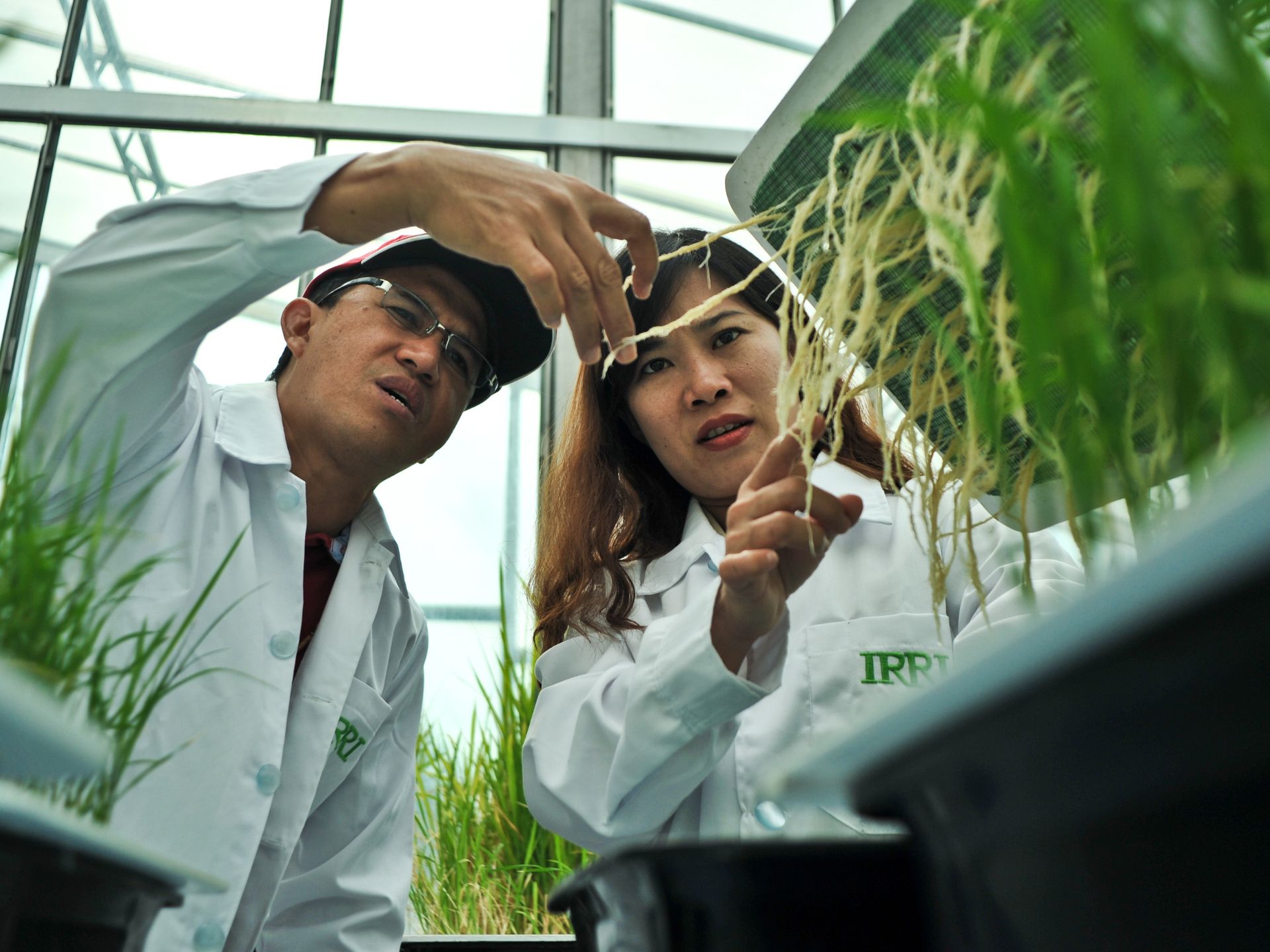
Image courtesy of International Rice Research Institute
✅ Must-Read Headlines
🍚 The Global Methane Hub has invested $30 million in an accelerator programme to fast-track solutions to lower methane emissions from rice production.
💡This is the organisation’s second flagship agricultural research initiative, following the Enteric Fermentation Accelerator, which focuses on lowering emissions from livestock.
🇫🇷 French startup Green Spot Technologies secured €5 million to expand production of its waste-derived fermented ingredients, including cocoa alternatives.
💡The startup will use the capital to scale up its capacity from 100 to 1,000 tonnes per year, and launch a new ingredients brand called Milatea.
🌱 Miyoko Schinner raised over $100,000 from crowd investors to help mount a winning bid for the vegan cheese firm she founded, Miyoko’s Creamery.
💡As part of her plans, Schinner formed a group of people who would manufacture the products and run the company, including a co-packer and executives with more than 30 years of industry experience.
💊 Singaporean startup Umami Bioworks launched a line of cell-cultured marine supplements to address nutritional deficiencies in non-seafood consumers.
💡The startup is keen on diversification and has made several strategic partnerships in different sectors, highlighting the breadth and versatility of cultivated ingredients.

Image courtesy of Anderson Piza
💰 Key Research & Consumer Insights
🍷 The future of coffee, cocoa and wine is already in danger thanks to climate change, and a new study, published in Environmental Research Letters, reveals that even the most advanced geoengineering interventions might not be enough to protect them.
🐄 New research from Planet Tracker suggests that the Global Methane Pledge’s goal of reducing methane emissions by 30% by 2030 is “unachievable without a step change in action” from the livestock sector.
🇺🇸 Seven in 10 Americans believe ultra-processed foods are a significant threat to public health and are trying to avoid them, a new survey conducted by Linkage Research has shown.

Image courtesy of Sreang Hok/Cornell University
🚀 Everything Else In Future Food
📉 After weeks of stock uncertainty, Beyond Meat has posted a 13% revenue decline in Q3 2025 and has adjusted its expectations for the next quarter, too. Here’s what that means.
🍎 Researchers at Cornell University have proposed a way to repurpose the waste left by the apple industry into a meatball enhancer that lowers beef content and keeps social media’s fibremaxxers happy.
🥛 Israel’s Remilk has partnered with industry leader Gad Dairies to launch three animal-free milk products using its precision-fermented whey protein in cafés, restaurants and (soon) supermarkets in the country.
🌱 As the US government shutdown leaves millions of Americans potentially hungry, Impossible Foods has kick-started a relief programme for SNAP recipients and those facing food insecurity.
🌱🍔 Future Food Quick Bites
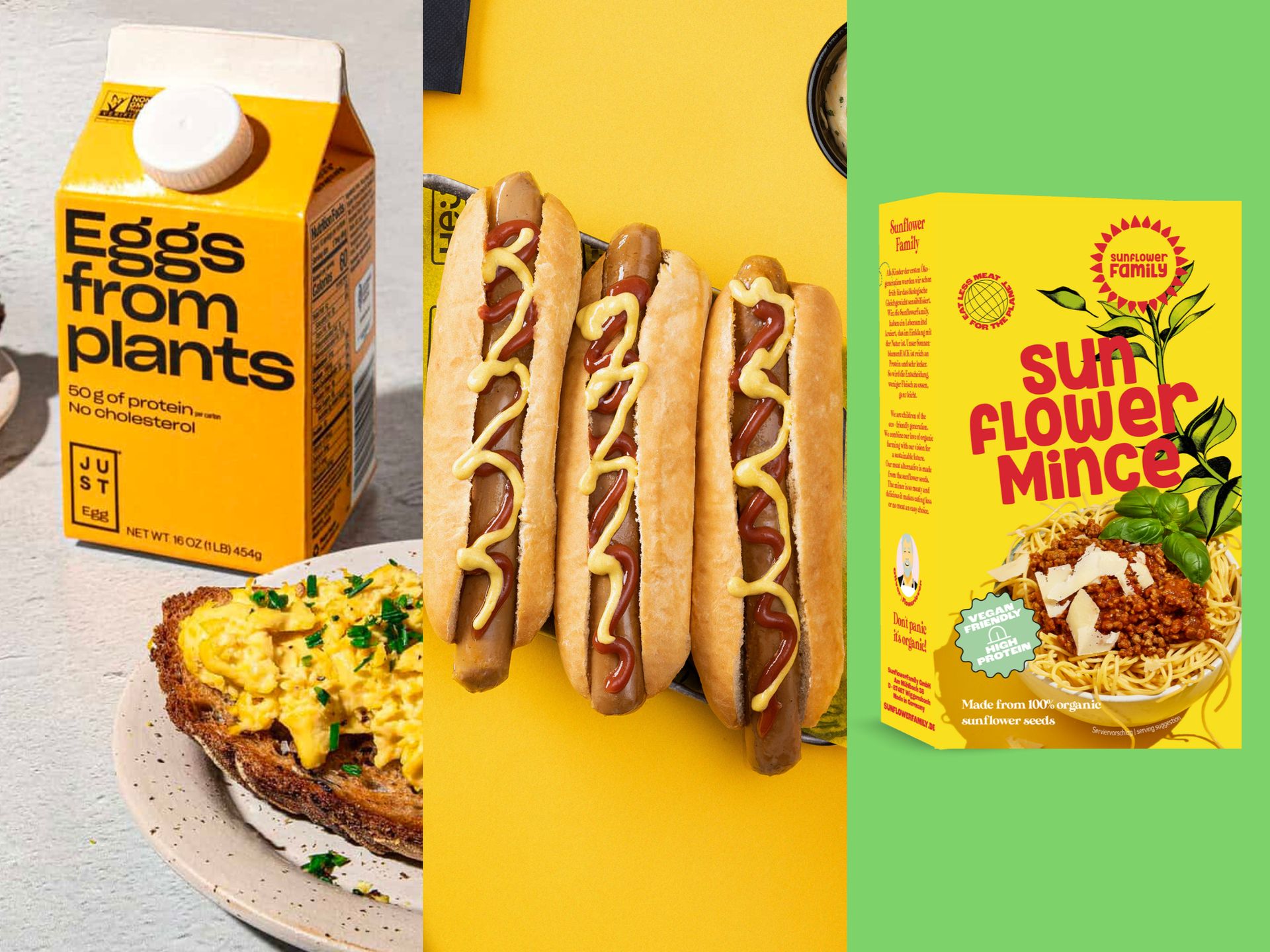
In our weekly column, Future Food Quick Bites, we round up the latest news and developments in the alternative protein and sustainable food industry. This week, Future Food Quick Bites covers Heura’s frankfurter recipe, Eat Just’s sector-leading sales, and Beyond Meat’s legal victory.
📆 Scene & Heard

🚀 Secure Your Spot At The Food Protein Summit 2026
🇺🇸 The Food Protein Summit 2026, happening 15th-16th April 2026, is where experts in nutrition, science, and technology come together to advance food protein production and support a more accessible, sustainable food system. Learn more here.
🏅 The Curt Bergfors 2026 Food Planet Prize Longlist is here! Over a thousand nominations have become a longlist of 35 initiatives - all innovative ideas with the potential to transform our global food system. Check it out here.
🏆 Applications for the Forward Fooding 2025 FoodTech 500 close TOMORROW! Don’t miss your chance to be considered; apply here.
Seeking impartial news? Meet 1440.
Every day, 3.5 million readers turn to 1440 for their factual news. We sift through 100+ sources to bring you a complete summary of politics, global events, business, and culture, all in a brief 5-minute email. Enjoy an impartial news experience.
The world’s leading global food system founders, investors, policymakers and corporate execs read Future Food Weekly → subscribe now.