- Green Queen Future Food Weekly
- Posts
- Do We Really Want To Go Back To Food in the 1900s? - Future Food Weekly
Do We Really Want To Go Back To Food in the 1900s? - Future Food Weekly
Plus: Major plant-based M&A moves and US lawmakers bucking the anti-alt meat trend. This and more in Green Queen Media's global roundup on future food news.


Sonalie Figueiras & Nicola Spalding
February 12, 2026
Morning All,
Just finished reading the New York Times guest essay “We Shouldn’t Want to Eat Like Our Great-Great-Grandparents,” and I have some thoughts!
The piece makes two broad arguments: (1) That industrialized food systems are basically good and useful because they feed millions safely, and that we shouldn’t/wouldn’t want to go back to our great-grandparents’ way of producing food. (2)That ultra-processed foods are useful, convenient, even “good.”
On the first point: the authors argue that we need the industrial food system and that it’s simplistic to romanticise a return to our great-grandparents’ era, where nothing was processed and everything was made from scratch. I very much agree. We are not equipped, in modern developed societies, to mill our own flour, grind our own peanut butter, or make our own (plant-based or conventional) milk. Most people do not have the time, resources, or interest to prepare every meal entirely from scratch, do their own canning, grain grinding, or cheesemaking.
Given the choice, most people would not go back. Most people need convenient solutions. But the answer is not “more ultra-processed crap.” The answer is more convenient, healthy foods—and an industrial system that owes us safe, nutritious food, rather than one that engineers addictive, hyper-palatable products and is subservient to shareholder returns, allowed to run amok when it comes to pesticides, toxic waste, environmental degradation, and unlimited high-emission foods.
However, the false dichotomy that “industrial food systems are good and we need them”, and while “aiming for local or organic food systems is naïve” is an oversimplification. What we need is an industrial food system with guardrails; what we deserve is an industrial food system with a climate conscience. We want (and should be entitled to) convenient, accessible, and budget-friendly foods produced at scale—pre-prepared or otherwise—that enable us to eat a healthy, nutritious diet without having to make everything ourselves and without destroying the planet.
On the second point: the idea that ultra-processed foods are fine because we’re feeding millions of people across the world, and most people are fine, is lacking nuance. Actually, there is plenty of research showing that diets mostly made up of highly processed, preservative-laden, nutritionally empty foods are causing a rise in preventable diseases and other health issues. As Sofia DeMartino writes in this wonderful essay: “Ultra-processed foods don’t just affect the individual body. They reshape entire communities because they dictate what’s available on shelves, what’s affordable for families, what’s advertised, what kids grow up thinking is normal, and what workers experience inside production plants. They affect energy, cognition, sleep, mood, productivity, and long-term health risks.”
At the same time, it’s also true that not all processed foods are bad.
As we explained in our guide to UPFs and plant-based meats, the Nova classification system—developed in Brazil by Dr Carlos Monteiro and widely used to categorise processed foods—is flawed. It is not entirely right to classify foods solely by degree of processing. Foods should be evaluated on both processing and nutritional content (not to mention climate cost, but I digress). “Ultra-processed” is too often treated as one big, monolithic category. It isn’t.
As per the excellent piece I cited by Mark Haas, we should be talking about “ultra-formulated” rather than ultra-processed. Haas uses applesauce as an example, but whole-wheat bread and sweetened Greek yogurt are also regularly maligned by Nova as “ultra-processed” despite not fitting the image of foods we should discourage people from eating. His ultra-formulated lens would more accurately push out snacks, candies, and empty-calorie foods that are high in sugar, salt, or unhealthy fats. Those are the products we should be figuring out how to get off shelves, off plates, and out of school backpacks.
And we should be focused on keeping the foods that are nutritious and, yes, in some cases, processed, rather than overly-formulated junk. We need food products that deliver real nutrition in convenient formats that modern life requires.
The Yuka app is worth mentioning here, too. As I wrote in my intro note a couple of weeks ago, its algorithm weights nutritional quality, additives, and organic farming status in a way that often gets closer to what Mark Haas is arguing for than the Nova system does. It’s not flawless, but it does a better job of distinguishing between an actually problematic ultra-formulated snack and, say, a perfectly reasonable wholegrain, minimally sweetened loaf of bread.
In short: we do need industrial food. We do need processing. We absolutely need convenience. But we do not need to celebrate an ultra-processed free-for-all or pretend the only options are 1900s home cooking or neon-packaged junk. The real work, and the real conversation, lies in building and regulating an industrial food system that delivers convenient, affordable, climate-conscious foods that are truly good for us.
-Sonalie

Image courtesy of Rami Shalosh
💡 Only On Green Queen
✅ Exclusive: Aleph Farms Hits Milestone in Cross-Platform Approach to Producing Cultivated Meat
Aleph Farms CEO Didier Toubia explains how the cultured meat startup used its own growth medium to cultivate cells developed by an external partner in Roslin Technologies.
🏈 Cigarettes, Super Bowl & Oat Milk: Food Industry Claps Back As UPF Discourse Intensifies
The debate around ultra-processed foods has been taken up a notch, with comparisons to cigarettes and a Super Bowl ad contrasting with Oatly’s embrace of the ‘processed’ label. Here’s what’s happening.
🚀 Op-Ed: Alternative Protein’s Delivery Phase – Why System Readiness is the New Bottleneck
Ali Morpeth, co-founder of the Planeatry Alliance, suggests that alternative proteins have reached a pivotal moment, and how the food system adapts them is the next big hurdle.
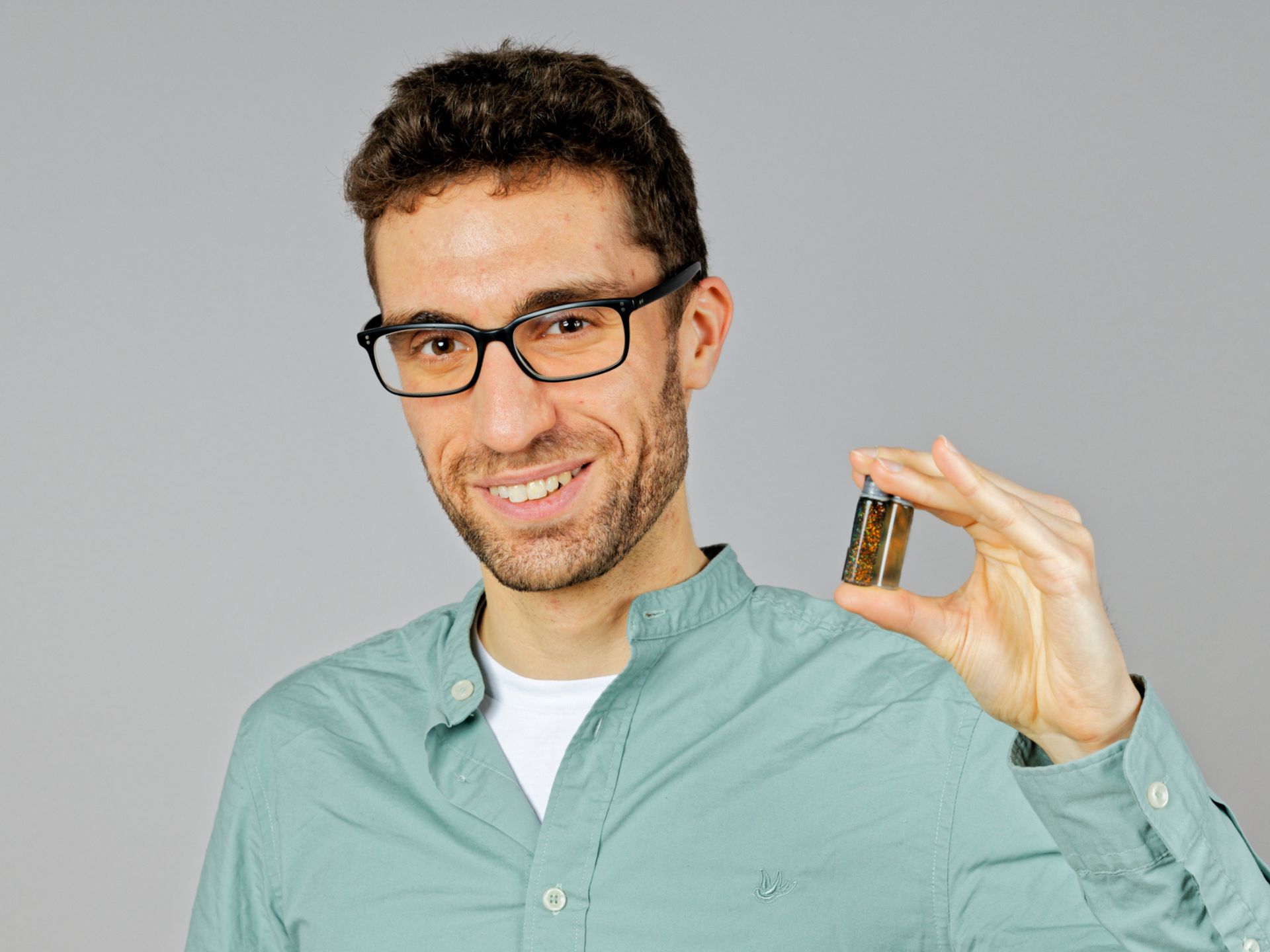
Image courtesy of Gabriella Bocchetti/University of Cambridge
✅ Must-Read Headlines
🎨 UK startup Sparxell, a spinout of the University of Cambridge, raised €4.2 million ($5 million) pre-Series A funding to replace fossil-fuel-derived pigments in the fashion and packaging sectors.
💡It uses cellulose from wood pulp to create “100% plant-based structural colour”, which it turns into biodegradable pigments, inks, glitters, sequins, and films.
🛒 German agrifood giant Cremer Group launched FermBase, a “competence centre and one-stop shop” for fermentation feedstock and media formulations
💡FermBase is designed to tackle the sourcing, scaling and cost challenges facing companies working on next-generation and precision fermentation.
💸 Tokyo-based biotech startup IntegriCulture posted full-year profitability in 2025, marking a significant milestone in its commercial growth.
💡The success is driven by its cellular agriculture infrastructure and products, following a year of new collaborations, brand launches and product showcases.
🇸🇬 Asian cellular agriculture firm Avant is winding down its research arm, Avant Proteins, in Singapore.
💡The company is still pursuing regulatory approval for its cultivated fish in the city-state, and is planning its “next step to support the industry in a different way”.
🔴 The US Food and Drug Administration has relaxed rules that restrict companies from labelling their food products as free from synthetic dyes, and approved a new beetroot-derived natural red colour from Israeli startup Phytolon.
💡The MAHA movement has been key to the removal of synthetic dyes, and offers a significant opportunity for makers of natural alternatives that meet consumer expectations.

Courtesy of SunOpta
🤝🏼 Big Acquisitions
🇳🇱 Dutch beverage giant Refresco has agreed to acquire US plant-based food and drink company SunOpta in a $1.1 billion deal, set to complete in Q2 2026.
💡Despite the general decline in the plant-based category, SunOpta reported a year-on-year revenue growth of nearly 17% in Q3 2025.
🇮🇳 Indian CPG giant Marico has agreed to buy a controlling stake in vegan protein and supplements brand Cosmix Wellness in a deal worth ₹226 crores ($25 million).
💡Cosmix was one of the earliest yeast protein players in the Indian market, and gained nationwide recognition during the founders’ appearance on Shark Tank India in 2024.
🇺🇸 US biomaterials startup MycoWorks has been acquired by DFX Corp and undergone a strategic restructuring to expand the reach of its Fine Mycelium technology.
💡It’s among the most well-capitalised startups in the biomaterials industry, having secured $187M from investors including Natalie Portman, John Legend, Gingko Bioworks, and General Motors.
👨🏻⚖ Lawmakers Making Waves
💡 Lawmakers in South Dakota were aiming to enforce a 10-year ban on cultivated meat; Governor Larry Rhoden vetoed the bill, calling it “against our values” and suggesting an alternative approach instead.
⛔️ A federal district judge ruled that Texas’s law requiring plant-based meat companies to use terms like ‘meatless’ violates the First Amendment and cannot be enforced.
📚 Key Research
🇪🇺 With a mere €1.4 billion in public funding, supportive policies for alternative proteins could add €111 billion a year to the EU economy by 2040, according to a new report by Systemiq with support from GFI Europe.
☕️ A new study from Plymouth Marjon University reveals that people are three times more likely to choose oat milk in their coffee drinks when it is offered as the default option, lowering emissions by 25-34%.
🐮 Increasing GHG emissions from livestock farming could result in a 36-50% decline in the area suitable for grazing by the end of the century, according to data from the Potsdam Institute for Climate Impact Research.

Image courtesy of Win-Win/Keylink
🚀 Everything Else In Future Food
🍫 UK startup Win-Win has signed an exclusive distribution deal with confectionery wholesaler Keylink to expand the reach of its cocoa-free chocolate alternatives.
🌿 Bay Area chain Palmetto Superfoods has introduced a new Blade Smoothie, featuring Leaft Foods’ alfalfa-derived Leaf Rubisco protein and an “unmatched” amino acid profile.
🆕 US startup Savor is expanding its carbon-based fats beyond food to address the climate issues caused by the use of tropical oils in cosmetics.
🌡️ Green Queen Wire: Planeatry Alliance has developed a new Food System Barometer, which showsthat protein diversification across the food system is moving from strategy into execution, but progress remains uneven and constrained by cost, supply, processing capacity and organisational capability.
🌱🍔 Future Food Quick Bites

In our weekly column, Future Food Quick Bites, we round up the latest news and developments in the alternative protein and sustainable food industry. This week, Future Food Quick Bites covers Picard Surgelés’ La Vie collab, Compass Group’s plant-forward hospital menu, and McDonald’s veggie breakup.
📆 Scene & Heard

Get ready for the 2nd Annual TASTY Awards!
🌱🥛 Head to San Francisco on 18th March for the 2nd Annual TASTY Awards, and you might run into Green Queen’s super reporter, Anay Mridul! Find out more here.
🏆Applications just opened for the FoodTech World Cup. The ultimate tournament to showcase the world’s best startups in Food BioTech hosted by Nestlé and FoodHack. Apply today to take part.
🎙️ Catch Green Queen’s Founding Editor Sonalie Figueiras on the Good Food Institute India’s Smart Protein Podcast, where she talks messaging, reporting, positioning, and communicating the need and value of alternative proteins to different audiences. Listen here.
🏅 Mondelēz International just launched the CoLab Tech accelerator. Startups will get access to the R&D leadership, Ventures Team, internal specialists & leading VCs. Learn more and apply here.
Feeling off lately? It could be your hormones.

3pm crashes. Unexpected weight gain. Unpredictable cycles. When symptoms pile up, your hormones and metabolic health are often part of the story. Allara provides virtual care from expert medical and nutrition providers to help you understand what's really going on. Whether you're managing PCOS, thyroid conditions, perimenopause, or unexplained symptoms, get a personalized care plan that addresses root causes instead of chasing quick fixes. All accessible virtually and covered by insurance for as little as $0.
The world’s leading global food system founders, investors, policymakers and corporate execs read Future Food Weekly → subscribe now.
